
Vegetables
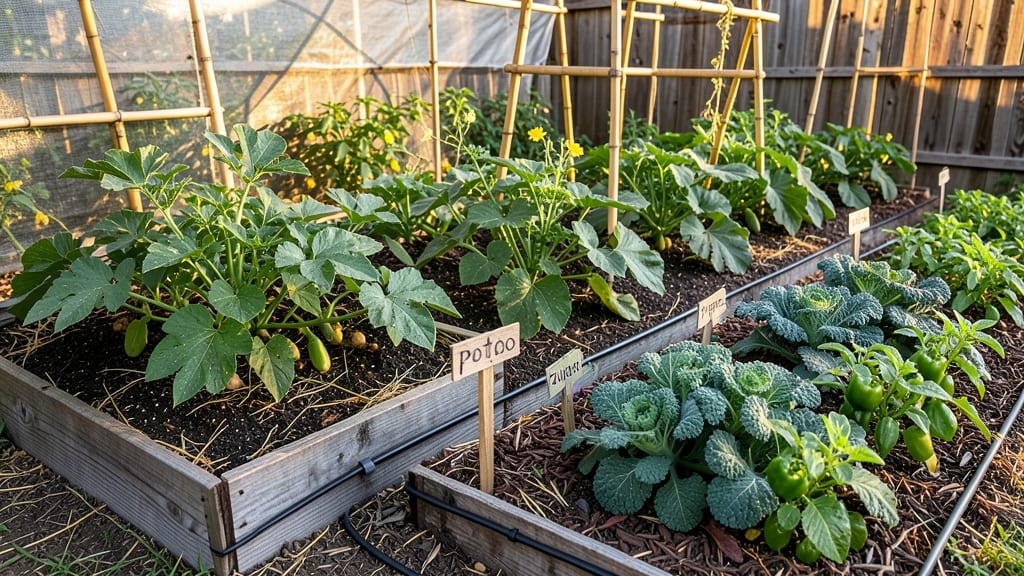
Vegetable gardening in Colorado feels like solving a high-altitude puzzle—short, unpredictable, and full of surprises. 🌱 The key to success? Choosing cold-hardy varieties that thrive in zones 5–7 while protecting them from late frosts and rocky soil.
My first garden here nearly failed until I swapped tender tomatoes for 'Colorado State' potatoes and 'Black Krim' tomatoes, which handle our cool nights better than anything at the nursery.
Start with soil that drains well—Colorado’s alkaline dirt needs compost and sulfur to balance pH. Plant peas and spinach in early spring (as soon as soil warms to 40°F), then move to heat-loving crops like peppers and eggplants after your last frost (usually late May to early June, depending on elevation).
A cold frame or row cover can extend your season by 3–4 weeks on either end.
You’ll end up with a garden that produces longer and more reliably than you’d expect—think crisp lettuce in May, fresh potatoes in August, and even fall kale before the first snow.
The trick is working with Colorado’s quirks, not against them: drought-tolerant varieties, afternoon shade for greens, and windbreaks to protect tender seedlings from our notorious spring storms.
For extra confidence, check Colorado State University Extension’s frost-free date maps—your mileage may vary by 1,000 feet of elevation. Start small, keep records, and next year, you’ll nail the timing. The payoff? Homegrown veggies that taste like summer, even when the mountains are still dusted with snow.
📚 In This Guide
- What you need
- Instructions
- Tips and common mistakes
- Wrapping up and next steps
What you need
- ● Garden Space: Raised beds (4’x8’ or 4’x12’ recommended for better drainage) – 2-4 beds
- ● In-ground plot (minimum 100 sq. ft. for beginners)
- ● Soil Amendments: Compost (2-3 cubic yards for a 100 sq. ft. plot)
- ● Peat moss or coconut coir (1-2 bags for raised beds)
- ● Balanced fertilizer (10-10-10 or organic options like alfalfa meal)
- ● Seeds & Seedlings: Cold-hardy vegetable seeds (e.g., potatoes, peas, kale, cabbage, carrots)
- ● Transplants for heat-sensitive crops (tomatoes, peppers, basil – after last frost)
- ● Tools: Garden trowel (for planting)
- ● Pruners (for harvesting)
- ● Hoe or cultivator (for weed control)
- ● Watering can or drip irrigation system (high-altitude gardens dry out fast!)
- ● Garden gloves (durable, waterproof)
- ● Protective Gear: Row covers or frost blankets (for early/late season protection)
- ○ Cold frames or mini greenhouses (optional but helpful for extending seasons)
- ● Soil test kit (to check pH and nutrient levels – ideal pH: 6.0-7.0)
- ● Mulch (straw or wood chips to retain moisture)
- ● Trellises or cages (for vining plants like beans or cucumbers)
- ● pH adjusters (lime to raise pH, sulfur to lower it)
- ● Garden journal (to track planting dates, weather, and harvests)
Instructions for thriving vegetable gardens in Colorado's unique climate
Colorado’s high-altitude growing season demands smart planning—here’s how to maximize yields with cold-hardy varieties and altitude-adapted techniques.
🌱 Step 1: Time Planting for Colorado’s Short Growing Season
Start seeds indoors 6-8 weeks before your last frost date—typically mid-April for most of the state. I use early May as my target for transplanting cold-hardy crops like peas and spinach, since Colorado’s frost can linger into late May at higher elevations. For heat-lovers like tomatoes and peppers, wait until after Memorial Day to avoid late frosts.
Check your specific microclimate—mountain valleys often frost later than front-range cities. Plant fast-maturing varieties (look for "early" or "short-day" labels) to squeeze in a full harvest before fall frosts hit in mid-September. I’ve found ‘Early Girl’ tomatoes and ‘Sugar Sprint’ peas consistently reliable for our 5,000-foot elevation garden.
☀️ Step 2: Optimize Sun Exposure for High-Altitude Intensity
Colorado’s sun is brighter and more intense than at sea level—protect young plants with 30% shade cloth for the first week after transplanting. South-facing beds get the most consistent light, but west-facing spots work well for late-season crops. I orient my 4-foot-wide raised beds north-south to maximize sun exposure on both sides.
Use reflective mulches like white plastic or straw to deflect excess heat from dark soil. Monitor leaf scorch—if edges turn crispy, it’s a sign of too much sun. Adjust with drip irrigation timed for early morning to keep foliage dry and reduce heat stress.
💧 Step 3: Master Watering for Colorado’s Dry Mountain Air
Water deeply 2-3 times per week rather than daily shallow sessions—this encourages deep root growth essential for drought resistance. Use a moisture meter to check 2-3 inches deep; soil should feel like a wrung-out sponge, not bone-dry. I water before 10 AM to prevent fungal issues from evening moisture.
Mulch 3-4 inches thick with straw or wood chips to lock in moisture and regulate soil temperature. Avoid organic mulches like grass clippings—they draw nitrogen from soil as they decompose. For container gardens, use self-watering pots with 1 inch of gravel at the bottom to prevent root rot from poor drainage.
✂️ Step 4: Extend the Season with Smart Protection
Use floating row covers in early spring to warm soil and protect seedlings from late frosts (which can hit anytime before June 1). Remove covers during the day once temperatures consistently stay above 50°F. For fall crops, install low tunnels or cold frames to buy 4-6 extra weeks of growing time.
Choose cold-tolerant varieties like ‘Winterbor’ kale or ‘Tyee’ carrots, which thrive in 25-30°F temperatures. I’ve successfully grown broccoli until mid-October by covering plants with agricultural fabric when night temps drop below 35°F. Harvest before hard frosts—even cold-hardy plants won’t survive prolonged freezes.
🪴 Step 5: Soil Prep for Colorado’s Thin, Rocky Topsoil
Amend native soil with 3-4 inches of compost and 1-2 inches of aged manure before planting. Colorado’s alkaline soil (pH 7.5-8.5) often needs elemental sulfur to lower pH for acid-loving crops like tomatoes. Test soil in fall and adjust—aim for pH 6.0-7.0 for most vegetables.
Build raised beds if your soil is rocky or compacted—they warm up faster in spring and drain better. I fill mine with a mix of 50% native soil, 30% compost, and 20% perlite for ideal drainage. Avoid fresh manure near transplant roots; it can burn tender seedlings.
Tips & tricks for perfect high-altitude vegetable gardening in Colorado
Colorado’s unique climate demands thoughtful adjustments—here’s how to turn challenges into triumphs with these battle-tested strategies.
Elevation-Specific Plant Selection: Stick to varieties labeled "short-day" or "early" for your specific elevation zone. At 5,000 feet, I’ve found that ‘Sugar Sprint’ peas and ‘Early Girl’ tomatoes consistently outperform standard varieties. The shorter growing season means you need plants that mature quickly—aim for varieties with 50-60 day harvest windows for spring planting. For fall crops, prioritize cold-tolerant options that can handle 25-30°F temperatures without bolting.
Soil pH Management: Colorado’s naturally alkaline soil (pH 7.5-8.5) can stifle many vegetables. Test your soil in fall and amend with elemental sulfur to lower pH to 6.0-7.0 for most crops. For acid-loving plants like tomatoes, a pH of 6.0-6.8 is ideal. I apply sulfur in fall to give it time to work into the soil profile—sprinkle 1 pound per 100 square feet and water thoroughly. Re-test in spring before planting to confirm adjustments.
Microclimate Mastery: Your garden’s location within Colorado creates dramatically different conditions. Mountain valleys often frost 2-3 weeks later than front-range cities, so adjust your planting timeline accordingly. I’ve learned to plant heat-lovers like peppers 10 days later in valley locations compared to Denver suburbs. Use a minimum thermometer to track nighttime lows—this helps determine when to remove protective covers in spring or when to apply frost blankets in fall.
Watering Precision: The 2-3 inches deep moisture check from the instructions is critical, but timing matters just as much. Colorado’s dry air means plants lose moisture quickly through transpiration. I’ve found that drip irrigation timed for 6-8 AM delivers water directly to roots while minimizing evaporation. For container gardens, use self-watering pots with 1 inch of gravel at the bottom to prevent root rot—this creates an air gap that improves drainage while maintaining moisture.
Pro Tips for Vegetable Gardening In Colorado
- Colorado’s unique climate demands thoughtful adjustments—here’s how to turn challenges into triumphs with these battl...
- Elevation-Specific Plant Selection: Stick to varieties labeled "short-day" or "early" for your specific elevation zon...
- Soil pH Management: Colorado’s naturally alkaline soil (pH 7.5-8.5) can stifle many vegetables. Test your soil in fal...
Frequently asked questions
Got questions about growing veggies in Colorado’s unique climate? You’re not alone! Here are answers to the most common concerns from aspiring high-altitude gardeners.
What are the best vegetables to grow in Colorado’s short growing season?
Focus on cold-hardy varieties like kale, spinach, broccoli, cabbage, and peas—they thrive in Colorado’s cooler temps. For longer seasons, try potatoes, carrots, and beets, which mature quickly. Hardened-off seedlings (like tomatoes or peppers) can also succeed with proper timing and protection.
When is the best time to plant vegetables in Colorado?
Start cool-season crops (March–April) as soon as soil is workable (around 40°F). Warm-season veggies (like tomatoes or peppers) need to wait until after the last frost (mid-May to June), but use row covers to extend the season. Check your USDA Zone (5–7) for local guidance!
How do I protect my garden from Colorado-specific pests like cabbage worms or deer?
Use row covers for early-season pests, neem oil for insects, and fencing (8 ft tall) to deter deer. Companion planting (e.g., marigolds with tomatoes) can also repel pests naturally. Handpicking (like cabbage worms) works too—just drop them in soapy water!
How often should I water my vegetable garden in Colorado’s dry climate?
Water deeply 1–2 times per week (early morning) to encourage strong roots. Colorado’s low humidity means drip irrigation or soaker hoses are ideal—they reduce evaporation. Avoid overhead watering to prevent fungal diseases. Mulch (straw or grass clippings) helps retain moisture.
Can I grow vegetables in containers in Colorado’s high-altitude areas?
Containers work well
for lettuce, herbs, peppers, and bush beans. Use lightweight, well-draining soil and larger pots (5+ gallons) for root crops. Place containers in sunny spots (6+ hours/day) and move them indoors if frost threatens. Dwarf varieties (like ‘Tiny Tim’ tomatoes) are perfect for small spaces!
Wrapping up and next steps
Gardening in Colorado’s high-altitude climate is totally doable—and rewarding—with the right cold-hardy varieties and smart planning! 🌱 From selecting frost-resistant seeds to mastering soil prep and watering techniques, you’re now equipped to grow a thriving garden even in the challenging conditions of the Centennial State.
The key? Start small, stay consistent, and enjoy the process—your future harvests will make it all worthwhile.
Ready to dig in? Sketch your garden layout today, pick your first few plants, and take that first step toward a bountiful, homegrown harvest. Happy gardening! 🌿