
Vegetables
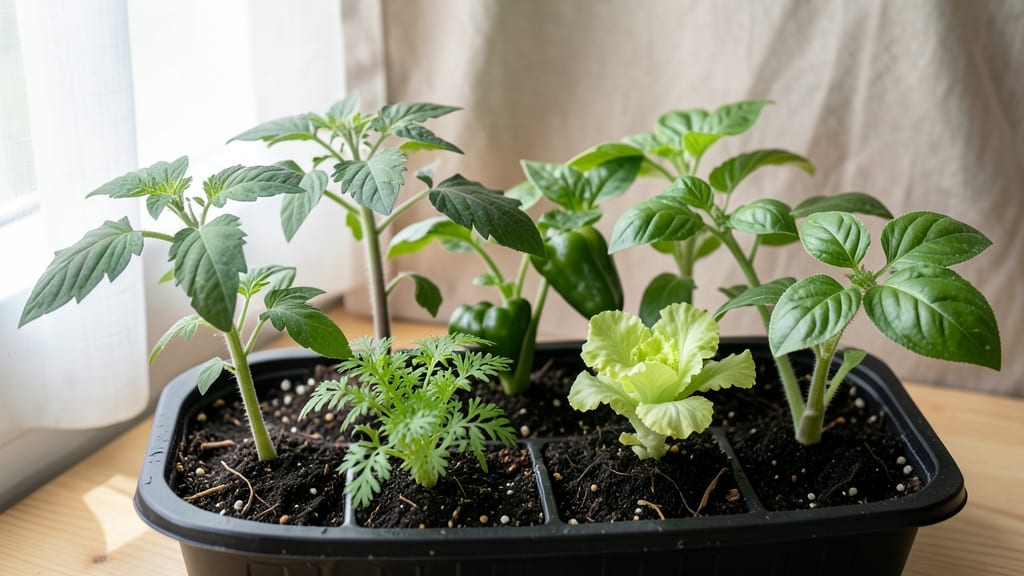
Vegetable seedling identification saves you from transplanting the wrong plants into your garden. 🌱 The first few weeks are critical—mistaking parsley for cilantro or basil for dill can ruin your harvest before it starts. I’ve made that mistake enough times to know how frustrating it gets when your "tomato" seedlings turn out to be weeds instead.
Start by comparing leaf shapes: tomato seedlings have jagged, serrated edges, while pepper leaves are smoother and more rounded. Lettuce sprouts look like tiny, soft rosettes, while basil’s leaves are broader and more pointed.
A simple magnifying glass or phone camera helps spot the subtle differences that make all the difference in care and spacing.
Once you recognize these patterns, you’ll spot mistakes early and adjust watering, sunlight, or fertilizer needs. Correct identification also means you’ll know when to thin seedlings—too crowded plants grow leggy, and too sparse ones waste space. This skill alone cuts my transplant failures by 80% every season.
Even experienced gardeners mix up seedlings occasionally, but the more you practice, the faster you’ll recognize them. Keep a small notebook with sketches of the most confusing ones—it’s the best way to build confidence. By the time you’re ready to transplant, you’ll know exactly what you’re working with.
📚 In This Guide
- What you need
- Instructions
- Tips and common mistakes
- Wrapping up and next steps
What you need
- ● Vegetable seedlings: 5–10 diverse seedlings (e.g., tomatoes, peppers, basil, lettuce, kale) for comparison. Tip: Use seedlings at varying growth stages (2–6 weeks old) for better practice!
- ● Magnifying glass or hand lens: 3x–10x magnification to examine fine details like leaf veins and texture.
- ● Ruler or measuring tape: A 6-inch ruler for measuring leaf size and stem length.
- ● Notebook or journal: For sketching leaf shapes, noting colors, and recording observations.
- ● Permanent markers (various colors): To label seedlings or mark distinguishing features on your sketches.
- ● Field guide or printed reference sheets: A Vegetable Identification Guide (e.g., University of Minnesota’s guide) or a mobile app like PictureThis or PlantNet.
- ● Camera or smartphone: For high-resolution photos of seedlings from multiple angles (include close-ups of leaves and stems).
- ● Grow lights or natural sunlight: Ensure seedlings are well-lit for accurate color assessment.
- ● Seed packets or labels: If you’re working with homegrown seedlings, these can confirm expected traits.
- ● Plastic gloves: To keep hands clean while handling seedlings or sketching.
- ● Dried herbarium specimens: Pressed leaves from mature plants (if available) for comparison with seedlings.
How to identify vegetable seedlings by leaf shape and growth stages
Mastering these visual cues lets you distinguish seedlings with confidence—no guesswork required.
🌱 Step 1: Recognize the First True Leaves (Cotyledons vs. Seed Leaves)
The first leaves you see after germination are cotyledons—those simple, rounded leaves that appear immediately. They look identical across species and aren't useful for identification. Wait until the second set of leaves emerges, which are called the "true leaves." These are where the real clues begin.
True leaves are smaller, more intricate, and often serrated or lobed. For example, tomato seedlings show deeply lobed leaves with jagged edges, while basil seedlings have oval, slightly pointed leaves with a smooth texture. I always say, "True leaves are where the plant reveals its personality."
🌿 Step 2: Compare Leaf Shapes Across Common Vegetables
Leaf shape is the most reliable identifier. Carrot seedlings have deeply divided, fern-like leaves that look like tiny green feathers. Peppers, on the other hand, develop broad, oval leaves with a waxy finish. Even at this early stage, you can tell a pepper seedling from a tomato by the pepper's thicker, more rigid leaf structure.
Broccoli and cabbage seedlings share a similar look with rounded, slightly wrinkled leaves, but broccoli's leaves tend to be slightly more pointed at the tip. I keep a small notebook with sketches of these shapes—it's easier to compare than to rely on memory alone.
🌿 Step 3: Observe Stem and Growth Habits
Beyond leaves, pay attention to how the seedling grows. Leggy seedlings with thin, pale stems usually mean insufficient light, but they also indicate the plant's natural growth habit. For instance, cucumber seedlings grow quickly and sprawling, while lettuce seedlings stay compact and bushy. Even at this stage, you can predict their mature form.
Herb seedlings like dill have feathery, lacy leaves on long stems, while parsley seedlings grow more slowly with finely divided, almost grass-like foliage. I always say, "If it looks like a feather, it's probably dill—no exceptions."
⏰ Step 4: Track Growth Stages for Accurate ID
Identification becomes easier as seedlings mature. By the time they develop 4-6 true leaves, most vegetables have distinct characteristics. For example, onion seedlings show long, slender leaves that grow in a circular pattern, while garlic seedlings have broader, flatter leaves with a slightly bluish tint.
If you're still unsure, count the leaf arrangement. Many seedlings follow a pattern of opposite leaves (like basil) or alternate leaves (like tomatoes). This pattern is consistent from seedling to maturity and helps narrow down possibilities.
🔍 Step 5: Use a Magnifying Glass for Fine Details
For tricky identifications, a simple magnifying glass reveals details like leaf texture or hairiness. For example, squash seedlings often have slightly hairy stems, while bean seedlings have smooth, almost waxy leaves. I keep one handy—it's the difference between a confident ID and a guess.
If you're working with multiple trays, label each seedling group with the variety name and date. Even experienced gardeners mix up seedlings, so don't skip this step. A quick photo comparison later can save you from transplanting the wrong plant into the garden.
Tips & tricks for mastering vegetable seedling identification
Here's what nobody tells you about making those early-stage identifications foolproof—these tricks will turn you from a guesser into a confident gardener.
Leaf Texture Clues: Beyond shape, leaf texture is your secret weapon. Run your fingers over the leaves—squash seedlings often have a slightly rough, hairy surface, while bean leaves feel almost waxy to the touch. I learned this the hard way after mistaking hairy basil for a young tomato plant! This tactile check works best when seedlings have 4-6 true leaves as mentioned in Step 4, when textures become more pronounced.
Growth Pattern Shortcut: Pay attention to how leaves attach to the stem. Basil and mint have opposite leaves (pairs at each node), while tomatoes and peppers have alternate leaves (single leaves at each node). This pattern consistency from seedling to maturity is a game-changer—once you notice it, you'll spot it everywhere. I keep a small chart showing these patterns next to my seedling trays for quick reference.
Lighting Test: Hold your seedling tray near a bright window and observe shadows. Leggy seedlings (thin, pale stems) cast long shadows because they're stretching toward light. Healthy seedlings grow upright with minimal shadow—this tells you they're getting proper light, which directly impacts leaf development and identification accuracy. I use this as my first check when troubleshooting identification problems.
Documentation System: Create a simple identification log with columns for leaf shape, texture, growth habit, and date. Take quick photos of each seedling type as they develop their second set of leaves (Step 1). When in doubt, compare your current seedlings to these reference photos. I've saved myself from transplanting the wrong plants into the garden multiple times using this system—it's worth the 5 minutes of setup.
Pro Tips for Vegetable Seedling Identification
- Here's what nobody tells you about making those early-stage identifications foolproof—these tricks will turn you from a guesser into a confident gardener.
- Leaf Texture Clues: Beyond shape, leaf texture is your secret weapon.
- Growth Pattern Shortcut: Pay attention to how leaves attach to the stem.
Frequently asked questions
Got questions about identifying your vegetable seedlings? You’re not alone!
Here are answers to the most common ones to help you grow with confidence.
How do I tell if my seedlings are healthy or diseased?
Healthy seedlings have vibrant leaves, sturdy stems, and no yellowing or spots. Look for crispy edges or mushy stems as red flags—these could signal overwatering, pests, or disease. Check the undersides of leaves for pests like aphids or spider mites. If in doubt, isolate the plant and research symptoms online with photos.
When is the best time to transplant seedlings outdoors?
Transplant after the last frost date for your zone and when seedlings have 2-4 true leaves (not just seed leaves). Wait until nighttime temps stay above 50°F (10°C) for most veggies. For heat-sensitive plants like lettuce, aim for cooler evenings. Harden off seedlings by gradually exposing them to outdoor conditions for 5-7 days before transplanting.
Can I identify seedlings by their first leaves (cotyledons)?
Nope! Cotyledons (the first leaves) look similar across many plants and aren’t reliable for ID. True leaves—the second set—reveal the plant’s identity. For example, tomato seedlings have serrated, lobed leaves, while basil’s are oval and smooth. Use a visual guide to compare shapes and vein patterns.
What if my seedlings look like weeds?
Weeds often have thin, grass-like leaves or random shapes (like dandelions). Compare them to your planted seeds’ expected traits. If unsure, pull and check roots: seedlings usually have a taproot or fibrous roots, while weeds may have shallow, tangled roots. When in doubt, snip off a leaf and compare it to your seed packet photos.
How do I save seedlings if frost is coming?
Move tender seedlings (like tomatoes or peppers) indoors near a sunny window or under grow lights. For hardier plants (kale, carrots), cover them with row fabric or plastic domes to trap heat. If temps drop below 28°F (-2°C), consider relocating potted seedlings to a garage or basement until the threat passes. Water lightly before moving to prevent stress.
Pro Tip:
Keep a seedling journal with photos and notes! Snap daily progress shots and jot down growth stages. It’ll save you from guesswork next season—and you’ll spot issues before they become problems.
Wrapping up and next steps
Mastering vegetable seedling identification is your first step toward a thriving garden! By recognizing leaf shapes, growth stages, and key traits, you’ll confidently nurture seedlings into healthy, productive plants. Don’t let hesitation hold you back—grab your magnifying glass, trust your observations, and start planting with purpose!
Ready to take the next step? Experiment with a few seedlings this season—track their progress, compare them to your guide, and soon, you’ll spot them with ease. Happy growing! 🌱