
Vegetables
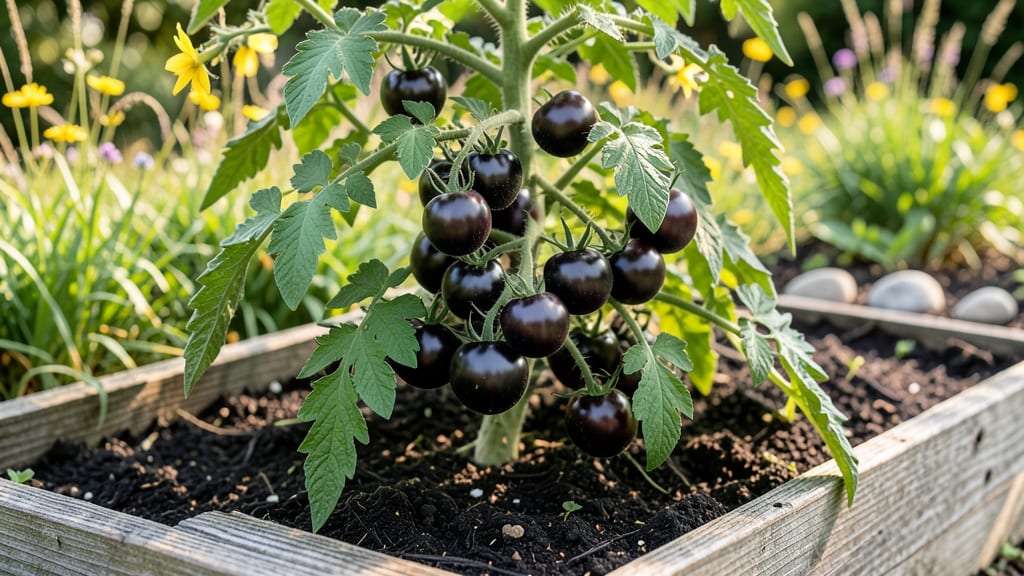
Growing Black Brandywine tomatoes from seed means 80 days of anticipation until you taste that legendary, jammy-sweet flavor. 🌱 Honestly, nothing else compares—this heirloom variety delivers the richest, most complex taste you’ll find in your garden, but it demands patience and a little extra care to thrive.
The secret starts with well-draining soil rich in organic matter and a sunny spot where it gets at least 6-8 hours of sunlight daily. Spacing matters too: give each plant 3-4 feet of room to sprawl, since these beauties grow into 6-foot vines loaded with 1-2 pound fruits.
Plant seeds indoors 6-8 weeks before your last frost, then transplant seedlings after nighttime temps stay above 50°F. Once established, keep soil consistently moist (not soggy) and feed every 2-3 weeks with a balanced fertilizer.
Prune suckers aggressively to focus energy on fruit production, and stake or cage those vines early—they’ll need support as they grow. With the right care, you’ll harvest 10-20 pounds of tomatoes per plant by midsummer, each one bursting with that signature deep purple-black hue and old-school tomato flavor.
The payoff? A harvest so impressive, neighbors will ask for cuttings. Just watch for blossom end rot (prevent with calcium) and cracking (water consistently), and you’ll avoid the most common pitfalls. Here’s how to make it happen—step by step.
📚 In This Guide
- What you need
- Instructions
- Tips and common mistakes
- Wrapping up and next steps
What you need
- ● Black Brandywine tomato seeds – 1 packet (contains ~20-30 seeds)
- ● Seed-starting mix – 1 small bag (sterile, well-draining, and seed-specific)
- ● Biodegradable seed pots or peat pellets – 6-10 units (3-4 inches deep)
- ● Grow lights or sunny windowsill – For seedling warmth (6-8 hours/day)
- ● Balanced fertilizer (5-10-5 or 10-10-10) – 1 small container (for transplanting)
- ● Garden soil or potting mix – 1 large bag (rich in organic matter, pH 6.0-6.8)
- ● Tomato cages or stakes – 2-3 sturdy units (6+ feet tall)
- ● Watering can or hose with gentle nozzle – For consistent moisture
- ● Pruning shears – For shaping plants and removing suckers
- ● Mulch (straw or grass clippings) – 1-2 bags (to retain moisture)
- ○ Compost or worm castings – Optional (boosts soil nutrients)
- ● Plant markers – To track varieties (if growing multiple types)
- ● Row cover or shade cloth – For early-season protection
Step-by-step guide to growing Black Brandywine tomatoes from seed
Here's how to cultivate these legendary heirlooms—rich, meaty, and worth every day of care.
🌱 Step 1: Start Seeds Indoors with Precision Timing
Black Brandywines need 80 days to maturity, so begin seeds indoors 10-12 weeks before your last frost date. I use 2-3 inch deep biodegradable pots filled with a sterile seed-starting mix—never garden soil, which compacts too much for tender roots. Press the mix down gently until it's firm but still crumbly.
Plant 2-3 seeds per pot at a depth of ¼ inch—any deeper and they'll struggle to reach light. Cover lightly with additional mix, then mist the surface until evenly damp. Place pots in a 75-85°F seedling heat mat to speed germination, which typically occurs in 7-14 days. The first true leaves (not the initial seed leaves) signal it's time to thin.
💧 Step 2: Provide Light and Prevent Leggy Growth
Black Brandywine seedlings demand 14-16 hours of light daily from the moment they sprout. A south-facing window won't cut it—you'll see pale, stretched stems reaching desperately for light. Instead, position a full-spectrum LED grow light just 2-4 inches above the seedlings, raising it as they grow to maintain that gap.
Water from the bottom by placing pots in a tray of ½ inch of water for 10 minutes, then drain. This prevents damping-off disease while keeping roots evenly moist. You'll know moisture is right when the soil surface feels damp but not soggy. Once seedlings show 2 sets of true leaves, thin to the strongest plant per pot, snipping the others at soil level.
☀️ Step 3: Harden Off and Transplant at the Right Moment
Two weeks before your last frost, begin hardening off by placing seedlings outside in a sheltered spot for 1-2 hours the first day. Gradually increase exposure over 10-14 days, ending with full sun. Black Brandywines thrive in full sun (6-8 hours daily), so choose a warm, sheltered location with well-draining soil.
Transplant on an overcast afternoon to reduce shock. Bury stems slightly deeper than in containers—this encourages stronger root systems. Water deeply at the base, keeping soil consistently moist (not soggy) for the first 2 weeks. You'll see new growth within 7-10 days if conditions are right.
✂️ Step 4: Prune and Support for Maximum Yield
Black Brandywines grow indeterminately, so install 6-foot cages or stakes at transplanting. As vines grow, prune suckers (side shoots in leaf axils) to focus energy on fruit production. I remove all suckers below the first flower cluster, leaving others to develop into secondary stems if needed.
Pinch off the first few flowers to delay fruiting until the plant is established. Once fruit sets, water at the base 1 inch per week, avoiding wet foliage to prevent disease. You'll know ripeness is near when tomatoes turn deep purple-black and yield slightly to gentle pressure.
🍅 Step 5: Harvest and Preserve the Flavor
Harvest Black Brandywines when fully colored but still slightly firm. Use pruning shears to avoid damaging stems. These tomatoes ripen unevenly—check plants every 2-3 days in peak season. Store unripe fruit at 55-60°F to finish ripening indoors.
For preservation, slice and freeze unripe tomatoes in a single layer before bagging, or can whole in pint jars following USDA guidelines. The rich, smoky-sweet flavor intensifies with proper care—worth every step from seed to table.
Tips & tricks for perfect Black Brandywine tomato growth
These insider tricks will help you avoid common pitfalls and maximize your Black Brandywine tomato harvest.
Germination Environment: The 75-85°F heat mat is non-negotiable for Black Brandywine seeds—they germinate best within this precise range. I've learned the hard way that cooler temps (below 70°F) can delay germination by weeks, while temps above 90°F risk damping-off disease. Place a small thermometer near your pots to monitor temperature consistently.
Lighting Strategy: Those critical 14-16 hours of daily light are easier to achieve than you think. I use a simple timer to automatically turn my grow lights on at 6am and off at 8pm—this consistency prevents leggy seedlings that reach desperately for light. If natural light is limited, supplement with a basic fluorescent bulb (even a shop light works) positioned just 2-4 inches above the seedlings.
Transplanting Technique: When it's time to transplant after your 10-14 day hardening off period, bury the stems slightly deeper than in containers. This might seem counterintuitive, but it encourages stronger root development from the buried stem sections. After transplanting, create a small watering well around each plant to direct moisture exactly where the roots will grow.
Pruning Precision: For maximum yield, focus your pruning efforts on removing suckers below the first flower cluster—these are the side shoots that form in the leaf axils. I use clean pruning shears (disinfected with rubbing alcohol) to make clean cuts at a 45-degree angle, which helps prevent disease entry points. Remember that each sucker you remove redirects energy to fruit production rather than foliage growth.
Pro Tips for Black Brandywine Tomato
- These insider tricks will help you avoid common pitfalls and maximize your Black Brandywine tomato harvest.
- Germination Environment: The 75-85°F heat mat is non-negotiable for Black Brandywine seeds—they germinate best within this precise range.
- Lighting Strategy: Those critical 14-16 hours of daily light are easier to achieve than you think.
Frequently asked questions
How do I know when Black Brandywine tomatoes are fully ripe?
These beauties are ripe when they turn a deep black-purple color (almost like a bruise) and feel slightly soft to the touch. The skin may also crack a little—this is normal! If you’re impatient, pick them when they’re firm but dark, then let them ripen indoors on a sunny windowsill for 3–5 days.
Can I grow Black Brandywine tomatoes in containers?
These vining tomatoes thrive in 5-gallon containers or larger (at least 12–18 inches deep). Use a high-quality potting mix with added compost, and provide sturdy cages or trellises—they can grow 6+ feet tall. Just ensure the pot has drainage holes to prevent root rot. Pro tip: Prune suckers regularly to encourage fruit production in smaller spaces.
Why are my Black Brandywine tomatoes cracking?
Cracking is common in heirlooms like these due to uneven watering or rapid growth. To prevent it:
- Water consistently (1–2 inches per week).
- Avoid late-season watering when fruit is nearly ripe.
- Use mulch to retain moisture.
What’s a good alternative if I can’t grow Black Brandywine?
If space or climate is a challenge, try these heirloom or indeterminate varieties with similar sweet, meaty flavors:
- Brandywine (red/pink cousin)
- Cherokee Purple (deep purple, disease-resistant)
- Sungold (orange, smaller but prolific)
How should I store unripe Black Brandywine tomatoes?
Store them at room temperature (not the fridge!) in a paper bag with a banana or apple to speed ripening. If you must refrigerate, let them warm to room temp for 24 hours before eating—they’ll taste bland if eaten cold. For long-term storage, canning or freezing (as sauce) works best!
Are Black Brandywine tomatoes prone to diseases?
Yes, but with care, you can minimize risks:
- Rotate crops yearly to avoid soil-borne diseases.
- Use resistant varieties if pests are common in your area.
- Prune lower leaves to improve airflow.
- Apply neem oil or copper fungicide preventatively.
Wrapping up and next steps
The Black Brandywine tomato isn’t just a garden favorite—it’s a flavor explosion waiting to happen! With its rich, meaty texture and deep, smoky-sweet taste, this heirloom gem proves that patience (and a little sun) pays off in the most delicious way.
Whether you’re a seasoned gardener or a curious beginner, growing these tomatoes is a rewarding journey that connects you to the joy of homegrown harvests.
Now that you’re armed with tips and answers, roll up your sleeves and plant those seeds! Start small, experiment with companion plants, and savor the satisfaction of biting into a tomato you grew yourself. Happy gardening—your taste buds will thank you! 🌱🍅